HomeResourcesWhat Silver Refineries Pay: Spot Price, Dealer Spread, and How to Get More (2026)
Finance

What Silver Refineries Pay: Spot Price, Dealer Spread, and How to Get More (2026)

Silver refineries pay 70-95% of spot depending on silver type and buyer. How the dealer spread works for 925, 999, and coin silver, and how to compare offers.

Hassaan RasheedJuly 6, 2026
10 min read
What Silver Refineries Pay: Spot Price, Dealer Spread, and How to Get More (2026)

Silver has a precise melt value you can calculate to the cent. What a refinery or dealer actually pays you for it is a different number, and the gap between those two figures is where most sellers get surprised.

The Silver and Scrap Metal Calculator gives you the melt value for any silver type at today's spot price. That number is your ceiling. Understanding how buyers arrive at their offer, and why it is always less than ceiling, helps you negotiate or at least recognize a fair offer when you see one.

What Silver Refineries Actually Pay vs Spot Price

A silver refinery's job is to process raw silver into .999 fine bars or granules that trade at spot price on the wholesale market. Their margin comes from the difference between what they pay for your raw silver and what they receive when they sell the refined product.

For high-purity silver (.999 bars or coins), refineries typically pay between 88% and 97% of spot price. The spread is tighter because less processing is required. A .999 silver bar needs minimal work to verify and resell, so the refinery can afford to offer closer to spot.

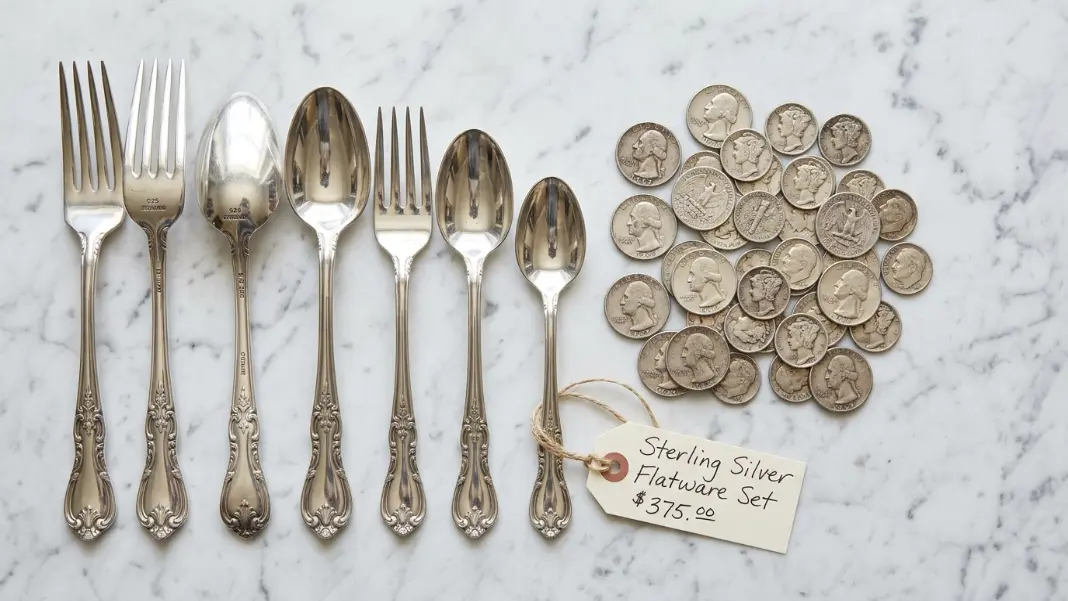
For sterling silver (925), coin silver (90%), and other alloys, the payout percentage drops because the refinery has to melt and process the material to remove base metals before it can sell. That processing adds cost, which reduces the offer.

The general payout ranges by silver type and buyer:

Silver TypeRefineryCoin DealerPawn Shop
.999 bars and rounds90-97%85-93%60-75%
90% coin silver85-92%80-90%55-70%
925 sterling78-88%75-85%50-65%
800 silver72-82%68-80%45-60%
Silver plateNot acceptedVaries (usually nothing)Not accepted

These ranges shift with spot price direction, the volume you are selling, and the specific buyer's cost structure. They are a reasonable planning baseline, not a guarantee.

How the Dealer Spread Works

The dealer spread is the difference between spot price and the price a buyer will pay, expressed as a dollar amount or percentage. It covers the buyer's overhead, processing cost, and profit margin.

If spot silver is $28 per troy ounce and a dealer offers you $24.50 for your sterling flatware, the spread is $3.50, or about 12.5%. That dealer is paying you 87.5% of spot.

Three things drive spread size:

Volume. Most refineries have minimum lot requirements, commonly 50 to 150 troy ounces for direct refinery submission. Below that threshold, they charge a flat processing fee or simply do not accept walk-in sellers. Coin dealers and online silver buyers work in smaller lots but charge a wider spread to compensate.

Purity and alloy type. .999 silver requires the least processing. 925 sterling requires melting and skimming copper. 800 silver has more base metal to remove. The more processing involved, the wider the spread.

Spot price direction. Buyers widen their spreads when silver prices are volatile or trending downward because they face inventory risk between when they buy from you and when they resell. In a rising market, spreads sometimes tighten because buyers want to accumulate inventory.

Where to Sell: Refineries vs Coin Dealers vs Online Buyers

The right selling channel depends on how much you have and what type of silver it is.

Refineries are the highest-paying option for large volumes of sterling or coin silver. They accept raw scrap in bulk and pay the closest to spot. The downside is the minimum lot requirement. If you have a single set of silverware, most refineries will not take it directly. You would need to accumulate a larger amount or go through a dealer who aggregates lots.

Coin dealers handle small to medium volumes and typically carry a slightly wider spread than refineries to account for their aggregation role. They are the most practical option for individuals selling flatware, jewelry, or a small collection of 90% coins. A reputable coin dealer will weigh your silver in front of you, quote you the day's price, and pay on the spot.

Online silver buyers like APMEX, JM Bullion's buying program, or specialty scrap buyers accept mailed shipments. They typically pay competitive rates for .999 fine silver and silver coins but take longer, require you to ship insured, and give you a quoted price that may expire before your shipment is received. For common silver types, their offers are usually in the same range as local coin dealers.

Pawn shops consistently pay the least. They profit from the spread between what they pay and what they resell, and they are not in the business of refining. For anything other than an emergency, a coin dealer or online buyer will offer more.

Bar chart comparing scrap silver payout percentage by buyer type: metal refinery, coin dealer, online silver buyer, and pawn shop, benchmarked against 100% spot price

How to Calculate Melt Value Before Getting an Offer

Walking into any buyer with your melt value already calculated removes the information asymmetry. A buyer who knows you know the melt value has less room to offer 60% and have you accept it.

Melt value calculation for sterling silver (925):

Weight (troy oz) = Weight in grams ÷ 31.1035
Silver content = Weight (troy oz) × 0.925
Melt value = Silver content × Current spot price

Worked example:

  • Your sterling flatware weighs 340 grams
  • 340 ÷ 31.1035 = 10.93 troy oz total weight
  • 10.93 × 0.925 = 10.11 troy oz of pure silver
  • At spot price of $28.00: 10.11 × $28.00 = $283.08 melt value

A fair offer from a coin dealer at 85% of spot would be approximately $240. An offer at $170 (60%) is on the low end and worth walking away from unless you need the cash immediately.

The How to Calculate Scrap Silver Value guide covers the full formula for 999, 925, 900, 835, and 800 silver types with worked examples for each.

How Silver Type Affects What You Actually Receive

Not all silver is treated equally, and buyers do not pay the same percentage for everything. Knowing where your specific silver falls on the processing difficulty scale helps you understand the offer before it is made.

.999 fine silver (stamped 999, Fine Silver, or as a modern round or bar) is the easiest for a buyer to value and resell. It requires no refinement. Buyers offer the tightest spreads on this type.

90% coin silver (pre-1965 US dimes, quarters, and half dollars) is well-understood and easily tested. Most coin dealers know the exact silver content per coin face value ($1 face = 0.715 troy oz silver). Offers tend to be strong and quick.

925 sterling (flatware, jewelry, tea sets) is the most common type sellers bring in. The 7.5% copper content means the refinery has to process it. Payout typically runs 78-88% of spot at a coin dealer, and slightly higher at a refinery if you have a large lot.

Silver plate is not the same as solid silver and is almost never worth melting. The silver coating is only a few microns thick. A full set of silver-plated flatware might contain less than a gram of actual silver. Most buyers will not purchase it for melt, and the ones who do pay almost nothing. If your pieces are stamped EPNS (electroplated nickel silver), EP, or "silver plate," they are not solid silver.

Check the Silver Price Per Gram calculator for current per-gram values across all five major silver grades, which lets you quickly translate any weight into a ballpark melt value.

Timing a Sale: Spot Price Direction and Why It Matters

Silver prices move daily. A 10% increase in spot price adds roughly 10% to your melt value, and selling at the right point in a price cycle can add meaningful dollars to the outcome.

The practical reality is that most individual sellers are not running a trading book. If you have old silverware you want to convert to cash, holding for a silver bull run is speculative. But a few timing principles are worth knowing.

Sell when the spot price has been rising, not falling. Buyers widen spreads in falling markets because they are hedging inventory risk. In a rising market, their buy prices track spot more closely.

Avoid selling immediately after a sharp spike. If silver moves up 5% in a day on news, coin dealers have often not adjusted their posted buy prices yet, which means you would be selling at the old price. Wait 24-48 hours for buy prices to catch up.

Get at least two quotes. Spot price is public. The spread each buyer takes is their margin, and it varies. A second quote takes 15 minutes and can easily be worth $30 to $50 on a mid-size lot of sterling.

For current silver prices and historical rate context, the Old Silver Rate Today post covers how antique silver valuations track spot price and how dealer premiums on collectable pieces differ from pure melt offers.

Silver refineries typically pay 88-97% of spot price for .999 fine silver and 78-88% for 925 sterling, depending on volume and purity. Most refineries require a minimum lot of 50-150 troy ounces for direct submission. For smaller quantities, a coin dealer or online silver buyer is more practical and pays comparable rates without the minimum lot requirement. Pawn shops consistently pay the least, often 50-65% of spot for sterling.

The dealer spread is the difference between the spot price and what a buyer pays you for your silver, expressed as a percentage. A buyer paying 85% of spot has a 15% spread. The spread covers their processing cost, overhead, and profit margin. Refineries carry the tightest spreads for large lots of high-purity silver. Pawn shops carry the widest. Getting multiple quotes is the most effective way to find the tightest spread available for your specific silver type and quantity.

Almost never. Silver plate has a thin coating of silver over a base metal core, typically a few microns thick. A full set of silver-plated flatware may contain less than one gram of actual silver. Most refineries and coin dealers will not purchase silver plate for scrap, and those who do pay very little. If your pieces are stamped EPNS, EP, or "silver plate," they are not solid silver and will not yield meaningful scrap value.

Divide the weight in grams by 31.1035 to get troy ounces. Multiply by the silver purity as a decimal (925 sterling = 0.925, 90% coin = 0.90). Multiply the result by the current spot price per troy ounce. For 340 grams of sterling at $28 spot: 340 ÷ 31.1035 = 10.93 troy oz, times 0.925 = 10.11 troy oz pure silver, times $28 = $283.08 melt value. A fair buyer offer is typically 78-90% of that number.

For large lots (50+ troy ounces), a metal refinery offers the best payout. For most individuals selling flatware, jewelry, or coins, a reputable coin dealer is the most practical option: they pay close to refinery rates for small lots, weigh in front of you, and pay immediately. Online silver buyers offer similar rates but require shipping. Pawn shops are the least favorable option and should be a last resort.

Usually, yes. 90% coin silver is easier for buyers to value (known weight and content per coin), requires less processing than sterling, and has a liquid resale market. Most coin dealers pay 85-92% of spot for circulated 90% coins versus 78-88% for 925 sterling flatware or jewelry. The difference reflects lower processing cost, faster resale, and better price transparency on the buyer's side.

Tags:how much do silver refineries payscrap silver payoutsilver dealer spreadselling scrap silversilver refinery payoutsilver melt value vs payoutscrap silver buyersilver spot price payout
HR

Written by

Hassaan Rasheed

Web Developer & Content Researcher

Hassaan builds calculators and writes research-backed guides on finance, math, payroll, and construction topics. Every number in his articles is sourced from official data and worked through by hand.

View LinkedIn Profile

Recent Posts