How to Calculate Your Period Cycle Length and Predict Future Dates
How to calculate cycle length, predict your next period, and track patterns over time.
8 min readRead →
For planning and educational purposes only. Results are estimates and not medical advice.
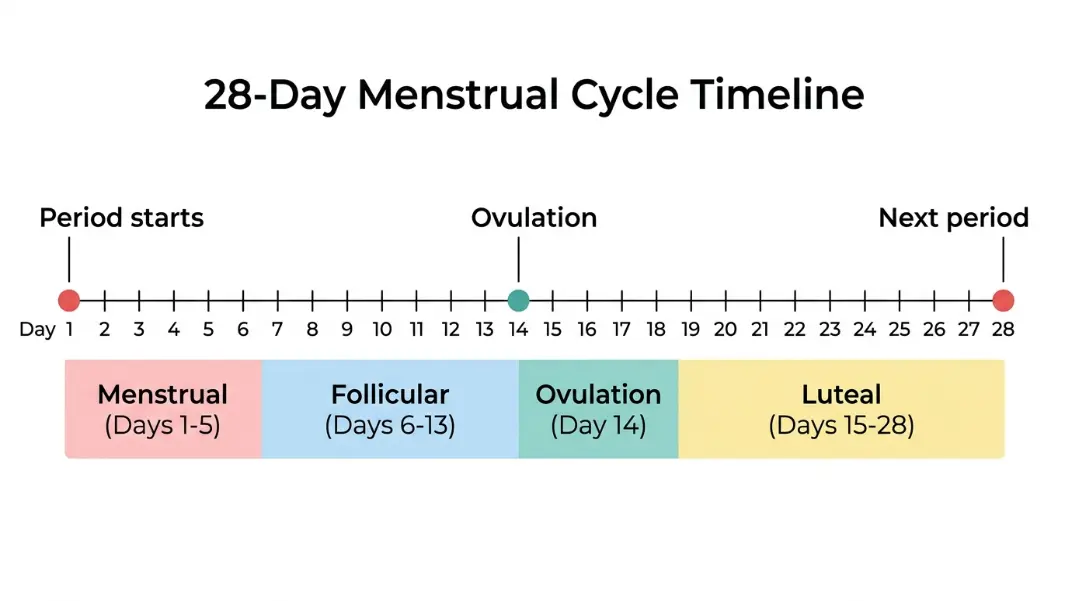
Your next period date is calculated by adding your cycle length to the first day of your last period. The cycle length is the number of days from the first day of one period to the first day of the next. The average is 28 days, but anything from 21 to 35 days is within the normal range for adults.
The 14-day ovulation estimate is based on a fixed luteal phase length. This holds for a standard 28-day cycle. For longer or shorter cycles, the follicular phase changes while the luteal phase stays roughly constant. This calculator adjusts automatically based on your entered cycle length. If you are tracking pregnancy milestones after conception, the Baby Percentile Calculator is a useful next step once you have a confirmed conception date.
A period is not technically late until it has passed its expected start date. Day-to-day variation is normal, so clinicians generally treat a period as late only after 5 or more days have passed beyond the predicted date.
| Days Past Expected Date | Status | Next Step |
|---|---|---|
| 1-4 days | Normal variation | No action needed |
| 5-9 days | Mildly late | Monitor; common causes include stress or illness |
| 10-14 days | Late | Take a pregnancy test if sexually active |
| 15-29 days | Significantly late | Repeat test; contact a healthcare provider |
| 30+ days | Missed period | See a doctor; rule out pregnancy, PCOS, thyroid |
Common causes of a late period beyond pregnancy include high stress, significant weight change, intense exercise, illness, travel across time zones, and starting or stopping hormonal contraception. A single late period is rarely a sign of a serious condition.
An irregular cycle varies by more than 7-9 days from month to month, or falls consistently outside the 21-35 day range. Common causes include PCOS, thyroid dysfunction, perimenopause, and significant stress or weight change.
To use this calculator with an irregular cycle, calculate your average over the last 3-6 months:
With a wide range, treat the predicted date as a center of a window rather than a fixed point. A 25-31 day range means your period could arrive up to 3 days earlier or later than the prediction. For those investigating a link between blood sugar control and cycle irregularity (common in PCOS), the A1C Calculator provides a reference for average glucose levels over the past 3 months.
Last period started April 1, 2026. Cycle length: 28 days. Period duration: 5 days.
The predicted date is an estimate based on a regular cycle. Most people's cycles vary by a few days from month to month. A period arriving 1-3 days early or late is normal. For health context alongside your age and cycle history, the Chronological Age Calculator can be a useful companion tool when preparing for medical appointments.
Medical disclaimer: This tool provides estimates for informational purposes only. It does not diagnose pregnancy, fertility issues, or menstrual disorders. Consult a healthcare provider for medical concerns.
In-depth guides related to this calculator.