Square Footage Calculator: How to Measure Any Room or Space (2026)
Method for simple rooms, L-shapes, irregular spaces, flooring waste, and GLA vs total floor area.
9 min readRead →
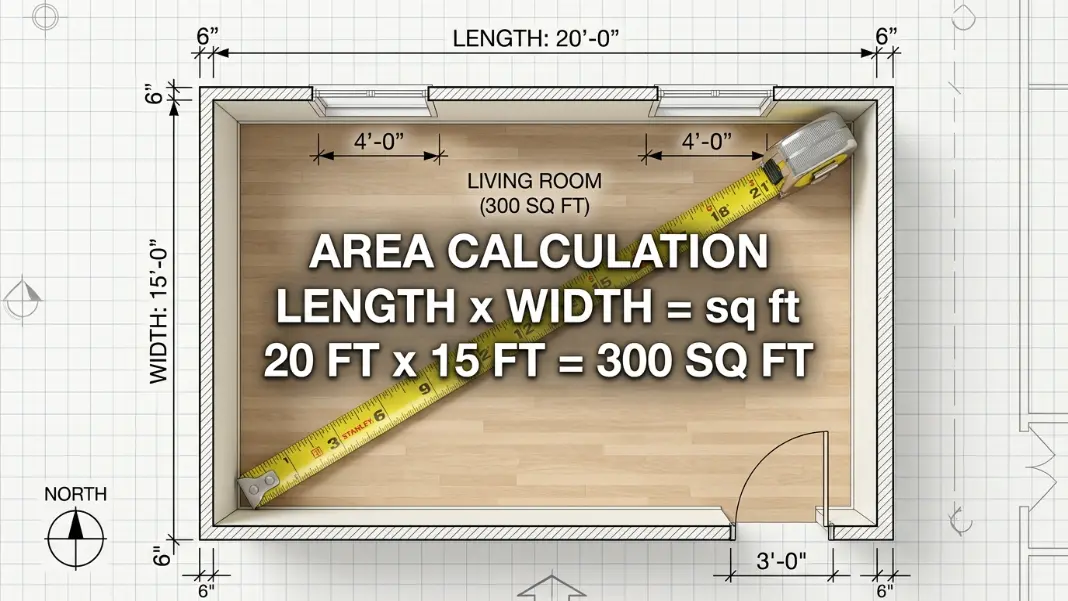
Square footage is the area of a two-dimensional space measured in square feet. The formula depends on the shape. All four shapes supported by this calculator use the same principle: measure the key dimensions, plug them in, and the area comes out in square feet.
Worked example (rectangle): A bedroom measuring 14 feet long by 12 feet wide.
For outdoor projects where square footage translates to material coverage, the Asphalt Calculator uses the same area principle to calculate tonnage for driveways and parking lots.
Roof area is always larger than the footprint because the slope adds surface. To calculate roof square footage, measure the horizontal footprint of the roof (length times width as seen from above), then multiply by the pitch factor for your roof slope:
| Pitch (rise:run) | Angle | Multiplier | Example: 30x40 ft footprint |
|---|---|---|---|
| Flat (0/12) | 0° | 1.000 | 1,200 sq ft |
| 3/12 | 14° | 1.031 | 1,237 sq ft |
| 4/12 | 18° | 1.054 | 1,265 sq ft |
| 6/12 | 27° | 1.118 | 1,342 sq ft |
| 8/12 | 34° | 1.202 | 1,442 sq ft |
| 10/12 | 40° | 1.302 | 1,562 sq ft |
| 12/12 (45°) | 45° | 1.414 | 1,697 sq ft |
One roofing square = 100 sq ft. A 1,342 sq ft roof = 13.42 squares. Roofers typically add 10-15% for waste, ridge caps, and hip cuts.
For help calculating your roof angle and pitch ratio from rise and run measurements, the Roof Pitch Calculator converts between pitch fraction, degree, and multiplier.
Never order the exact square footage of your room. Every installation produces waste from cuts at edges, corners, and around obstacles. The waste factor depends on the pattern and complexity:
| Material / Pattern | Waste Factor | Order for 200 sq ft room | Notes |
|---|---|---|---|
| Hardwood / laminate (straight) | 10% | 220 sq ft | Standard installation |
| Carpet | 10% | 220 sq ft | Add seam allowance |
| Tile (12x12, straight) | 10% | 220 sq ft | 220 tiles needed |
| Tile (diagonal / herringbone) | 15% | 230 sq ft | More edge cuts |
| Tile in wet area | 15-20% | 230-240 sq ft | Extra for breakage |
| Vinyl plank | 10% | 220 sq ft | Stagger seams |
| Drywall (4x8 sheets, 32 sq ft) | 10% | 7 sheets | Round up to whole sheets |
Tile count depends on tile size. For 12x12 tiles (1 sq ft each), the count equals square footage. For 18x18 tiles (2.25 sq ft each), divide total sq ft by 2.25. For sod, mulch, or gravel coverage in a yard project, the Topsoil Calculator converts square footage and depth into cubic yards for bulk material orders.
Wall square footage is used for paint coverage, wallpaper, and drywall estimates. The gross calculation is simple: wall length times wall height. The net calculation subtracts doors and windows, which are not covered by surface materials.
| Opening Type | Standard Size | Area to Subtract |
|---|---|---|
| Standard interior door | 3 ft x 7 ft | 21 sq ft |
| Standard exterior door | 3 ft x 6.8 ft | 20 sq ft |
| Small window | 2.5 ft x 3 ft | 7.5 sq ft |
| Standard window | 3 ft x 4 ft | 12 sq ft |
| Large window | 4 ft x 5 ft | 20 sq ft |
| Sliding glass door | 6 ft x 6.8 ft | 41 sq ft |
For a 12 x 9 ft wall (108 sq ft gross) with one door (21 sq ft) and one window (12 sq ft): net = 108 - 21 - 12 = 75 sq ft. Drywall: 75 / 32 = 2.34, round up to 3 sheets, plus 10% = 3-4 sheets.
Example 1: Rectangular living room. The room measures 18 feet long by 14 feet wide.
Example 2: L-shaped open-plan area. Section A is 20 ft x 10 ft. Section B is 12 ft x 8 ft.
In-depth guides related to this calculator.