Baby Percentile Calculator 2026
How to Calculate Baby Weight and Length Percentile
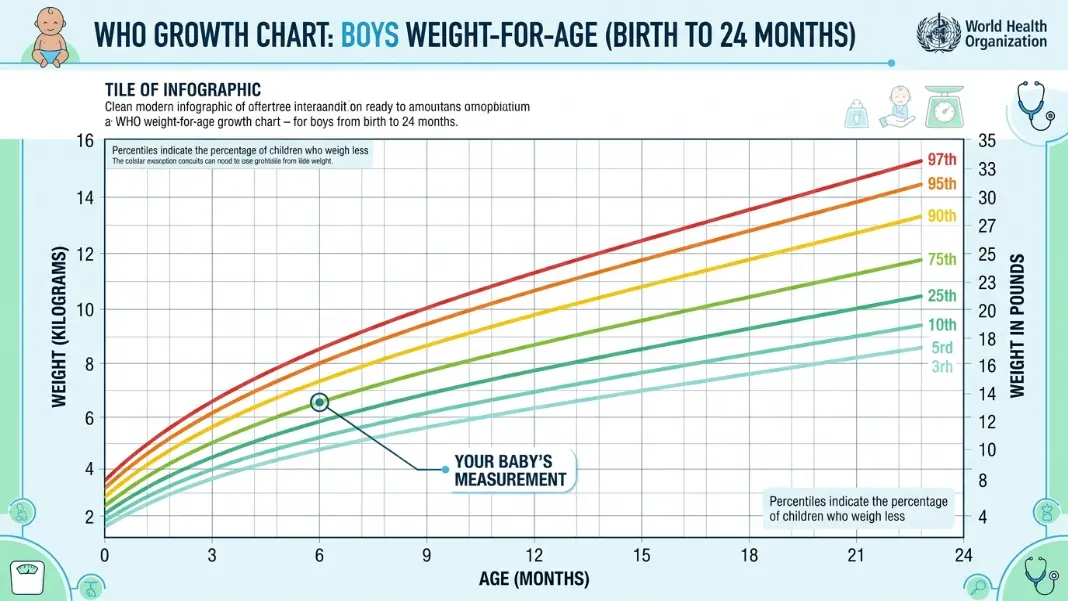
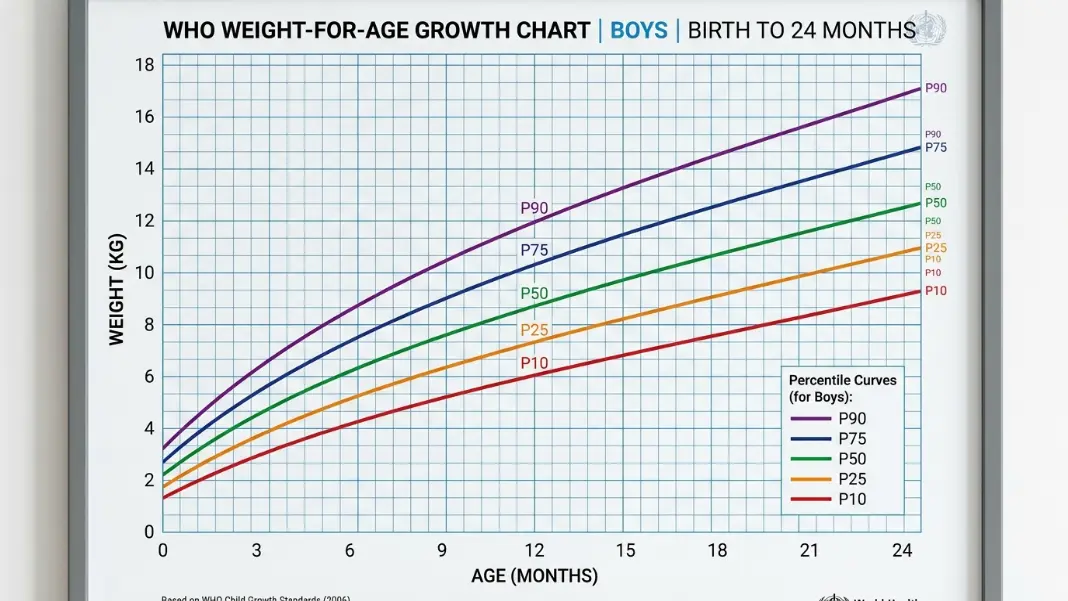
The WHO Child Growth Standards provide sex-specific L, M, and S parameters for every completed month from birth through 24 months. The calculator uses the corresponding monthly row directly and computes a continuous percentile:
Enter completed whole months, matching the WHO monthly tables. The Chronological Age Calculator can help determine age; for example, a baby aged 6 months and 2 weeks is entered here as 6 completed months.
Primary sources: WHO weight-for-age standards · WHO length/height-for-age standards.
Baby Boy and Baby Girl Percentile: Why Sex-Specific Charts Matter
Boys and girls follow different weight and length trajectories from birth. At every age from 0 to 24 months, boys have higher weight and length thresholds at each percentile level than girls of the same age. The weight gap is small at birth (roughly 0.2 kg) and grows to about 0.7 kg by 12 months. The length gap is roughly 1 cm at birth and widens slightly through 24 months.
Using the sex-specific chart avoids comparing a measurement with the wrong reference distribution. The WHO publishes separate LMS tables for boys and girls, and this calculator selects the corresponding table based on your input. Weight-for-age and length-for-age describe separate measurements; neither result alone diagnoses underweight, overweight, or a health condition.
This calculator covers weight-for-age and length-for-age for ages 0–24 months. In U.S. clinical practice, the CDC recommends its growth charts from age 2 onward. New mothers tracking postpartum recovery alongside infant growth monitoring can also use the Period Calculator to monitor cycle return after delivery.
Breastfed Baby Percentile: WHO vs CDC Growth Standards
The WHO chart used in this calculator was built from a multicentre study of healthy, breastfed infants in six countries. Because it reflects optimal growth conditions, it is considered prescriptive: it shows how babies should grow, not just how they do grow in a given population.
The older CDC 2000 charts describe a U.S. reference population, while the WHO standards were designed around growth under specified health and feeding conditions. CDC notes that growth patterns differ by feeding type and that formula-fed infants tend to gain weight more rapidly after about 3 months. That difference is one reason a clinician interprets the trajectory on the recommended chart rather than treating a single percentile as a diagnosis.
The CDC recommends WHO standards for U.S. children under 2 regardless of feeding method. Parents managing gestational diabetes postpartum can track blood glucose alongside infant growth using our A1C Calculator.
Frequently Asked Questions
Related Guides
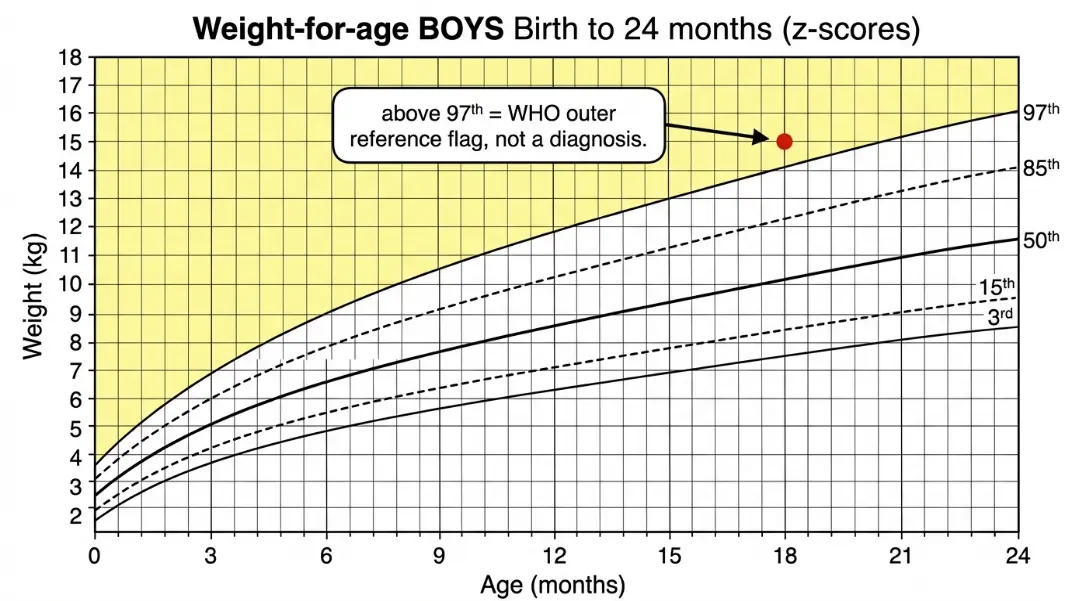
A single percentile cannot establish a growth trend or diagnose a health condition. Keep accurate serial measurements and let your pediatrician interpret weight, length, feeding, development, and medical history together.