HomeResourcesOld Silver Rate Today: How to Calculate What Your Antique Silver Is Worth (2026)
Finance

Old Silver Rate Today: How to Calculate What Your Antique Silver Is Worth (2026)

Old silver rate is today's spot price adjusted for purity and dealer margin. How to calculate old silver value per gram, why old rates differ from new silver, and what affects the price in your city.

Hassaan RasheedJune 12, 2026
9 min read
Old Silver Rate Today: How to Calculate What Your Antique Silver Is Worth (2026)

Old silver and new silver use the same underlying calculation: weight, purity, and today's spot price. The difference is the dealer margin. New silver purchased from a jeweler or mint carries a premium over spot. Old silver sold to a dealer carries a discount below spot. The gap between what you would pay to buy new silver and what a dealer pays you for old silver is typically 20% to 40% of the calculated spot value.

The Silver Calculator shows the current spot-based value for any weight and purity. This guide explains why old silver trades at a discount, how to calculate what your pieces are worth, and what affects the quoted rate across different cities and buyers.

What "Old Silver" Means

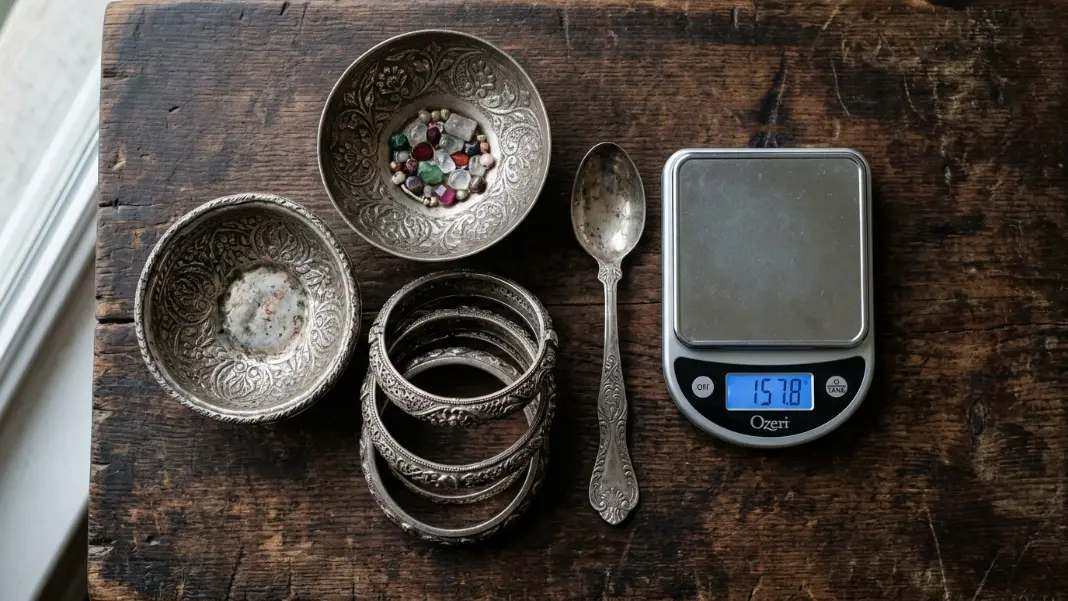
Old silver refers to antique or used silver articles: utensils, ornaments, jewelry, idols, and silverware that are no longer being sold as new. These items were made at various points in history from silver of varying purity.

In the Indian market, old silver is commonly traded by weight. Dealers calculate the price per gram based on the current silver market rate adjusted downward for:

  • Dealer margin (the cost of refining, assaying, and resale)
  • Uncertainty about purity (old items often lack clear hallmarks)
  • Condition (damaged or heavily worn pieces get lower rates)
  • Solder and fittings (non-silver components reduce the net silver content)

The difference between "old silver rate" and "new silver rate" in daily usage is this dealer margin. When you see "old silver rate today" quoted for Chennai, Mumbai, or Kolkata, it reflects what a local buyer will pay per gram for used silver articles, not the full spot-equivalent value.

How Old Silver Rate Is Calculated

The base formula is the same as for any silver:

Value = Weight (grams) × Purity (%) × Spot Price (per gram)

For pure silver (999 fine), 1 gram × 100% × spot price gives full spot value. Old silver articles are rarely 999 fine. Common purities found in old articles:

Purity MarkSilver ContentCommon Use
99999.9%Bullion bars, coins
92592.5%Sterling silver jewelry, cutlery
90090.0%Some European silverware
83583.5%Continental European silver
80080.0%German, Austrian, and Indian silverware
UnmarkedUnknownRequires assay

Most old Indian silverware falls in the 800 to 925 range. Older ornaments from rural areas may be 80% to 90% pure without any hallmark. Items without a purity mark are bought at a steeper discount because the buyer cannot confirm purity without testing.

Example calculation for 100 grams of 925 silver:

Using a spot price of ₹95 per gram (new silver rate):

Full spot value: 100g × 92.5% × ₹95 = ₹8,787.50
Dealer old silver rate (25% discount): ₹8,787.50 × 75% = ₹6,590.63
Old silver rate per gram of article weight: ₹65.91

The dealer pays roughly ₹65 to ₹66 per gram of the article's total weight, versus the ₹87.88 per gram of silver content at full spot.

Why Old Silver Pays Less Than Spot Price

Dealers buying old silver cannot immediately resell it at spot price. They must account for several factors:

Refining costs. Old articles must be melted, refined, and assayed before the silver can be used again. Refining charges in India run from ₹8 to ₹20 per gram depending on volume and purity.

Assay uncertainty. Without a verified hallmark, the dealer does not know the exact purity. They price conservatively to protect against the possibility that an article contains less silver than it appears.

Solder and fittings. Clasps, hinges, and solder on silver ornaments often contain copper or brass. The dealer's quoted price per gram covers the entire article weight, including non-silver components that reduce the net silver content.

Market margin. The dealer needs a profit margin between what they pay for old silver and what they receive when they sell refined silver or fabricate new articles.

The combined effect is a 20% to 40% discount to spot value for most old silver transactions. Clean, hallmarked 925 sterling at a reputable buyer may fetch 80% to 85% of spot. Unmarked, damaged, or heavily soldered pieces may fetch 60% to 70% of spot or less.

How to Calculate Old Silver Rate for Your City

Old silver rates vary by city because local spot prices fluctuate slightly with currency, transport, and demand. The calculation method is the same everywhere.

Step 1: Find today's silver spot price in your currency per gram. Silver spot is quoted globally in USD per troy ounce. One troy ounce equals 31.1035 grams. Convert to INR using the current exchange rate:

Spot price per gram (INR) = (USD spot per troy ounce × INR/USD rate) ÷ 31.1035

Step 2: Apply the purity factor. If the article is 925 sterling, multiply by 0.925. If 800 grade, multiply by 0.800.

Step 3: Apply the local dealer discount. Typical old silver dealer rates in major Indian cities run 70% to 80% of the calculated purity-adjusted value for common articles.

Worked example for Chennai at current silver prices:

Assume spot price of $30 per troy ounce (USD), USD/INR rate of 83:

Spot per gram: ($30 × 83) ÷ 31.1035 = ₹80.05 per gram
For 925 silver: ₹80.05 × 0.925 = ₹74.05 per gram (silver content value)
Old silver rate at 75% of content value: ₹74.05 × 0.75 = ₹55.54 per gram

The dealer would quote approximately ₹55 to ₹58 per gram for a standard 925 silver article in Chennai under these conditions. Rates in Mumbai, Kolkata, Ahmedabad, Trivandrum, Bhubaneswar, and Vijayawada follow the same formula with small local variations.

For rates based on US market prices, the Silver Calculator handles the weight and purity calculation automatically in USD and shows current spot-based values.

How to Check If You Are Getting a Fair Rate

Three steps before selling old silver:

Check the live spot price. Find today's spot price in your currency and calculate what 70% to 80% of purity-adjusted value looks like for your article weight. If a dealer quotes significantly below that range, get a second opinion.

Ask about purity testing. Reputable dealers will identify the purity hallmark or assay the piece before offering a price. A buyer who quotes without testing is pricing conservatively to cover the uncertainty, which means you are subsidizing their risk.

Weigh the piece yourself first. A kitchen scale accurate to 0.1 grams gives you the weight before you hand it over. Subtract a rough estimate for visible fittings and solder. Compare the dealer's per-gram rate against your own calculation before agreeing to a price.

Old Silver vs New Silver: When the Gap Is Smallest

The gap between old and new silver rates narrows when:

  • Silver spot prices are rising quickly (dealers want inventory and compete for it)
  • The article carries a clear 925 or higher hallmark with no doubt about purity
  • The piece is clean, undamaged, and has minimal non-silver fittings
  • The volume is large (dealers pay better per-gram rates for bulk transactions)

The gap widens when:

  • Spot prices are falling (dealers price defensively and want less inventory)
  • The article has no hallmark and requires destructive testing to verify purity
  • The piece has heavy solder, base metal components, or mixed materials
  • You are selling to a retail jeweler rather than a wholesale silver buyer

Wholesale buyers who deal directly with refineries consistently offer better per-gram rates than retail jewelers buying old silver as a secondary activity. If you have a significant quantity of old silver, seeking out a wholesale buyer rather than a local jewelry shop will almost always produce a better rate.

Old Silver Purity Guide: Common Indian Articles

Article TypeTypical PurityNotes
Sterling cutlery, post-1950925Often hallmarked
Antique jewelry, major cities900-925Maker's mark may be present
Traditional ornaments, rural800-900Rarely hallmarked
Old idols and utensils800Common in south India
Very old coins, pre-independence917 (22K equivalent silver alloy)Rare, value may exceed melt
Unmarked bangles and chainsVaries 700-925Requires assay for accurate pricing

Old silver purity comparison table showing value per gram for 999, 925, 900, 835, and 800 grade silver at current spot price

For 925 sterling, the What Is 925 Silver Worth guide shows the full value calculation at current spot prices. For coin silver and junk silver, the Junk Silver Calculator guide covers US pre-1965 coins and 800-grade European silver.

The old silver rate per gram changes daily with the silver spot price. It is calculated as: spot price per gram × purity percentage × local dealer factor (typically 70% to 80%). For 925 sterling silver, the old rate runs approximately 65% to 75% of the full spot value per gram in most Indian cities. Use the Silver Calculator to find today's spot-based value for your weight and purity, then apply a 20% to 30% reduction for what a dealer typically pays for used articles.

Dealers who buy old silver must pay for refining and assaying before they can resell it. They also price in uncertainty about purity (especially for unmarked pieces), solder and non-silver fittings that reduce net silver content, and their own profit margin. The combined discount is typically 20% to 40% below the calculated spot value for the article's purity and weight. Clean, hallmarked 925 silver fetches the smallest discount. Unmarked or heavily worked pieces fetch the largest discount.

Weigh the article in grams. Identify the purity mark (925, 800, 835, or estimate if unmarked). Find today's silver spot price per gram in your currency. Multiply: weight × purity fraction × spot price to get full silver content value. Then apply the local dealer discount, typically 70% to 80% of that value for the old silver rate. Example: 50 grams of 925 silver with spot at ₹80 per gram gives 50 × 0.925 × ₹80 = ₹3,700 full value. At 75% dealer rate, the old silver price is ₹2,775 for that piece.

Slightly. The silver spot price is global, but local currency conversion, transport costs, and local demand cause small variations between cities. Chennai, Mumbai, Kolkata, Ahmedabad, and other major Indian cities typically differ by 1% to 3% on any given day. The calculation method is the same everywhere. The dealer margin varies more between individual buyers than between cities. Getting quotes from multiple buyers in the same city will often produce a wider price range than comparing one city to another.

Most old Indian silverware falls in the 800 to 925 range. Silver utensils and ornaments made before 1990 are commonly 80% to 90% pure (800 to 900 grade). Jewelry and cutlery from established makers often carries a 925 hallmark. Very old items, particularly from rural areas, may have no hallmark. Items without a hallmark are typically purchased at a discount of 30% to 40% below spot because the buyer cannot confirm purity without destructive testing or an XRF assay.

Purity directly multiplies the value. A 100-gram piece of 925 silver contains 92.5 grams of pure silver. A 100-gram piece of 800 silver contains only 80 grams. At the same spot price and dealer discount, the 925 piece is worth 15.6% more than the 800 piece by weight. This is why knowing the hallmark before selling matters. An unmarked piece assumed to be 800 grade when it is actually 925 would result in you receiving less than the article is worth. Always identify the purity mark before agreeing to a price.

Tags:old silver rate todayold silver rateold silver price per gramhow to calculate old silver ratescrap silver price per gramantique silver valuesilver rate today oldold silver rate today chennai
HR

Written by

Hassaan Rasheed

Web Developer & Content Researcher

Hassaan builds calculators and writes research-backed guides on finance, math, payroll, and construction topics. Every number in his articles is sourced from official data and worked through by hand.

View LinkedIn Profile

Recent Posts