Sterling Silver Jewelry and Flatware Value: How to Calculate What You Have (2026)
Calculate sterling jewelry and flatware melt value using verified alloy weight. Understand pennyweight, filled handles, purity, and net resale versus scrap offers.
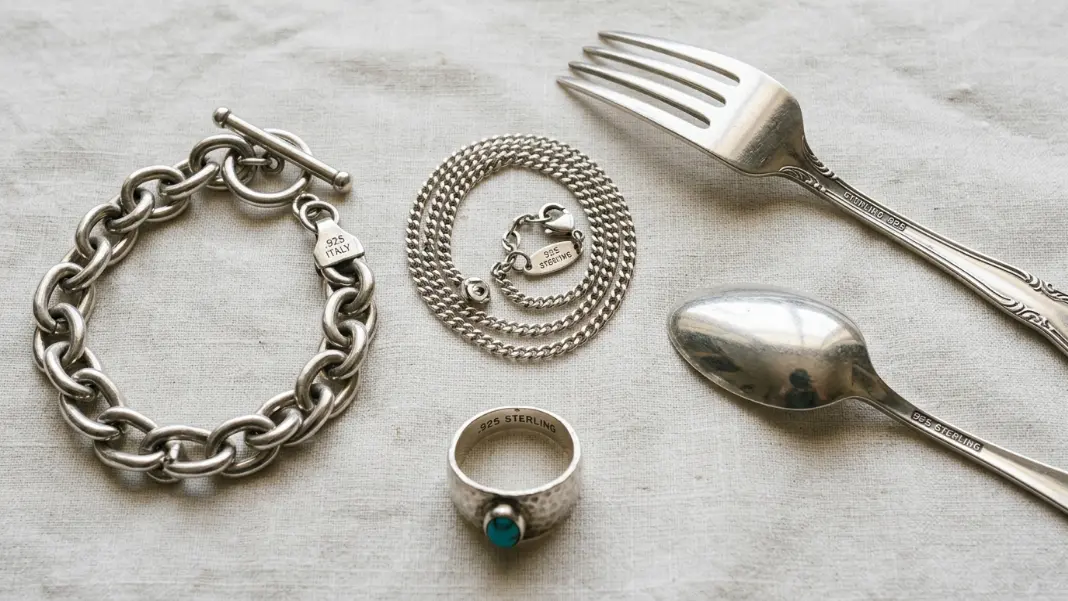
A sterling silver ring, chain, or flatware set has a metal-content value you can estimate from its net sterling alloy weight. Its resale value as an intact object is a separate question. Do both comparisons before accepting a scrap offer.
The Silver Calculator uses a price entered manually in USD per troy ounce. The starting price is a labeled example, not a live market feed. All $32 prices below are hypothetical.
What 925 Means for the Calculation#
The FTC jewelry guide explains that sterling silver contains 92.5% silver and may be marked 925. The remaining alloy weight is not fine silver.
Fine silver grams = Net sterling alloy grams × 0.925
Melt estimate = Fine silver grams ÷ 31.1034768 × Entered price
Apply 0.925 once. If an assay already reports fine silver grams, skip that step. Similarly, a buyer's quoted rate per gram of sterling may already include purity: multiply that rate by accepted sterling grams, rather than reducing it again.
A stamp on one component does not establish the composition of the whole item. Verify uncertain markings and separate components before treating total scale weight as sterling.
Grams, Troy Ounces, and Pennyweight#
| Unit | Equivalent weight |
|---|---|
| 1 troy ounce | 31.1034768 grams |
| 1 pennyweight (dwt) | 1.55517384 grams, or 1/20 troy ounce |
| 1 ordinary ounce | 28.349523125 grams |
These units follow the NIST mass conversion table. Check the scale's unit; an ordinary ounce is smaller than a troy ounce.
At the illustrative $32 price, one pennyweight of sterling alloy has a melt estimate of:
$32 × 0.925 ÷ 20 = $1.48 per dwt of sterling alloy
An illustrative offer of $0.90 per dwt equals 60.81% of that melt estimate, before any additional fees. This percentage describes the quote; it is not a universal judgment about a fair pawn-shop rate.
Weigh Jewelry Without Counting Stones as Silver#
Weigh each item and record what is included. Stones, enamel, steel springs, and clasps of a different metal can make the whole-item weight unsuitable for a sterling calculation. Do not assume the weight of an unseen component.
For a piece that cannot be separated without damage, ask a buyer or assayer how they determine the accepted metal weight. Label a provisional weight estimate clearly. Obtain an appraisal before removing stones or altering a collectible piece.
These hypothetical net sterling alloy weights illustrate the formula:
| Piece example | Net sterling alloy grams | Melt at example $32 |
|---|---|---|
| Small ring | 4.5 | $4.28 |
| Chain | 22 | $20.94 |
| Bracelet | 35 | $33.31 |
| Solid fork | 50 | $47.58 |
Values are rounded only after calculating. They are not typical product weights, market prices, or buyer offers. A class ring needs the same checks: the ring style does not establish purity, and its stone does not count as sterling.
For verified 800 silver, substitute 0.800. A 22-gram alloy piece at the same $32 example price has a melt estimate of $18.11. Do not assign 800 purity merely because a piece is European. The per-gram guide covers other verified fineness values.
Flatware and the Weighted-Handle Problem#
A sterling-handled knife may have a stainless-steel blade, a steel shank, and filler inside the handle. A weighted candlestick may have a thin sterling exterior around non-silver material. The scale reports all of that mass.
Only the verified sterling alloy portion belongs in a 925 calculation. Do not count a steel blade or shank as silver, and do not use a generic percentage of the whole knife's weight. The amount of filler and shell weight varies by item.
Use a simple inventory:
| Item group | Information to record |
|---|---|
| Solid forks and spoons | Count, actual alloy weight, verified purity |
| Knives with sterling handles | Whole weight separately from assessed sterling shell weight |
| Weighted hollowware | How filler and other components are excluded |
| Plated pieces | Keep separate; total weight does not establish silver content |
For a set containing 800 grams of verified sterling alloy after exclusions, the hypothetical $32 calculation is:
800 × 0.925 ÷ 31.1034768 × $32 = $761.33
This is an example inventory, not a claim that an eight-place setting contains 800 grams. Count and weigh your particular set.
Compare Resale With Scrap#
Maker, pattern, age, completeness, and condition may affect what someone will pay for an intact piece. A recognized name alone does not establish a fixed premium. Compare completed sales for closely matching pieces, including dimensions, weight, condition, and missing parts.
Calculate net resale proceeds after selling fees, shipping, and repair costs. Compare that with actual scrap offers after their deductions. A high asking price is not evidence of a completed sale.
Avoid calling melt value an absolute floor. Scrap proceeds can be lower, and collectible resale can be higher. The old silver guide explains how to compare accepted weights, price timestamps, fees, and net offers.
Compare Buyers Using the Same Inputs#
Ask each buyer for the accepted sterling weight, test result, reference price, gross offer, fees, and net cash amount. If two buyers use different weights, resolve that difference before comparing payout percentages.
There is no universal 70% or 85% threshold that determines whether a jewelry or flatware quote is fair. Compare real quotes for your items and the value of selling them intact. The refinery guide shows why a lower headline percentage can produce higher net proceeds when fees differ.
Use net sterling alloy grams × 0.925 ÷ 31.1034768 × the manually supplied price per fine troy ounce. A hypothetical 22-gram sterling chain at $32 gives $20.94 before buyer terms.
One pennyweight is 1.55517384 grams or 1/20 of a troy ounce. At an illustrative $32 price, one pennyweight of sterling alloy has $1.48 in fine silver content.
You may record its whole weight, but do not treat that as sterling weight. Steel parts and handle filler must be excluded or separately assessed. There is no reliable fixed silver weight for every knife.
Calculate its verified net alloy weight for a metal estimate, then compare actual intact-set and scrap offers. Pattern, completeness, condition, and fees can affect net proceeds; there is no standard set value.
Request a dated quote stating accepted weight, units, fees, and net proceeds. Convert per-gram or per-pennyweight offers consistently and compare other buyers; this page does not publish current payout ranges.
References
Written by
Hassaan Rasheed
Web Developer & Content Researcher
Hassaan builds calculators and writes source-linked guides across the site's subject areas. Calculator methods and reference data are documented in each guide so readers can verify the underlying sources.
About the author and methods