Home›Resources›Silver Plate Value Calculator: Is Silver-Plated Flatware Worth Scrapping? (2026)
Finance
Silver Plate Value Calculator: Is Silver-Plated Flatware Worth Scrapping? (2026)
Identify silver plate versus sterling and understand why total plated-item weight cannot establish silver content, recovery proceeds, or antique resale value.
Hassaan RasheedJune 24, 2026Updated September 7, 2026
6 min read
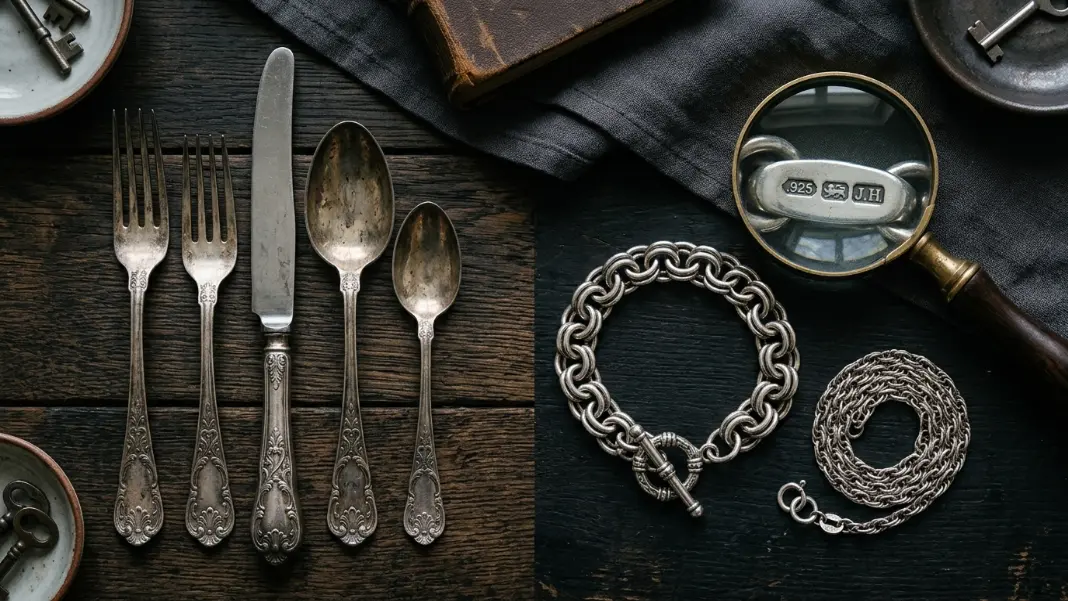
Silver-plated flatware has a layer of silver over another material. Its total weight does not tell you how much silver it contains, so entering the whole piece as 925 sterling can produce a large overestimate.
The Silver Calculator estimates known silver content from weight, purity, and a manually entered USD price. Its starting price is a labeled example, not a live quote. It cannot infer plating thickness or recoverable silver from a fork's total weight.
The FTC jewelry guide distinguishes sterling silver from silver plate: sterling contains 92.5% silver, while plate has a silver layer applied to a base metal.
Mark or description
What it tells you
What it does not prove
925 or STERLING
A claim of sterling composition
That every attached part or filling is sterling
EP or silver plate
An electroplated or plated item
The silver coating's weight
EPNS
Electroplated nickel silver
That the base alloy is silver
EPBM
Electroplated Britannia metal
A recoverable silver quantity
A1 or another plating grade
A maker's plating designation
A universal purity or thickness
Old Sheffield Plate
A historically distinct plated material
A standard melt value or guaranteed antique premium
Read the full set of marks, not one isolated symbol. Manufacturer names, numbers, and worn stamps can be confused with purity marks. If the material is uncertain, obtain identification before calculating.
A magnet can reveal magnetic components, but a nonmagnetic item is not necessarily silver. Many plated base alloys are also nonmagnetic. A magnetic steel blade or clasp does not prove that a separate handle or chain is made from the same metal.
For solid sterling, a known alloy weight can be multiplied by 0.925. Plate has different materials in layers, so that calculation does not apply to the total item.
A coating calculation would need its plated surface area, actual thickness, and material density:
Coating volume = Plated surface area × Coating thickness
Coating mass = Coating volume × Coating density
Even then, the result describes a theoretical coating mass. Wear, uneven coating, inaccessible surfaces, and processing recovery affect how much a refiner can recover. An EPNS mark does not supply the missing measurements.
This page does not assume a standard 20–30 micron layer, silver grams per fork, or universal recovery rate. Those quantities need item-specific evidence. Do not convert a hypothetical coating into an actual scrap offer.
Metal Content, Recoverable Metal, and Net Proceeds#
These are three different figures:
Figure
Basis
Metal-content estimate
Verified silver quantity × a stated reference price
Recoverable silver
Silver a processor expects to recover using its method
Net proceeds
Actual buyer payment minus all seller-paid costs
A small amount of recoverable silver may be uneconomic to process after fees and shipping. That does not make every plated item literally silver-free, and it does not establish a universal $0 offer.
Ask a processor whether it accepts your material, how it assesses the lot, whether base-metal value is included, and what deductions apply. Obtain those terms before shipping. Do not assume that a buyer accepting sterling also accepts silver plate.
For a hypothetical contrast, 100 grams of verified sterling alloy at an example $32 per fine troy ounce contains about $95.17 in silver. A 100-gram plated object cannot be assigned a silver value from its total weight alone.
Antique and Decorative Resale Is a Separate Market#
A plated piece may have value for its design, maker, usefulness, or historical interest. Sheffield Museums' metalwork collection includes Old Sheffield Plate alongside other metalwork; this illustrates its relevance as a historical object, not a price guarantee.
Identify the maker, pattern, dimensions, approximate period, and condition. Compare completed sales of closely matching objects. Check missing parts, repairs, worn-through plating, and whether pieces belong to a complete set.
A listing price for a different tea service does not establish your item's value. Nor does a word such as Victorian, Sheffield, or antique guarantee a premium. Avoid polishing, replating, dismantling, or destructive testing before establishing whether those changes could affect a collectible piece.
For ordinary usable flatware, compare actual secondhand offers. For a potentially collectible piece, seek a buyer who can evaluate its identity and condition. For bulk material, ask an accepting processor for net recovery terms.
Include commissions, packing, shipping, insurance, and any proposed restoration costs. The best comparison is the cash left after costs for your particular item, not an unsupported percentage of a sterling calculation.
It can have secondhand, decorative, collectible, or material value, depending on the item and buyer. Small recovery lots may not cover processing costs. There is no universal scrap value that follows from total weight.
EPNS means electroplated nickel silver. The plating contains silver; the nickel-silver base alloy is a different material. The mark does not state how many grams of silver remain.
No. That treats the entire base-metal object as 92.5% silver. You would need verified silver content or a processor's assessment of the plated lot instead.
No. Nonmagnetic base alloys can also be plated, while a partly sterling item can include a magnetic steel component. Use marks and suitable professional assessment together.
There is no reliable universal amount. Surface area, original plating, wear, and construction differ. An assumed thickness or recovery percentage is not an assay of your fork.
Some pieces may attract collector interest, but identity, condition, and comparable sales matter. This page does not assign a fixed antique price range.
Tags:silver plate value calculatoris silver plate worth anythingsilver plated flatware valueEPNS silver valuesilver plate hallmarkssterling silver vs silver platescrap silver plateantique silver plate value
HR
Written by
Hassaan Rasheed
Web Developer & Content Researcher
Hassaan builds calculators and writes source-linked guides across the site's subject areas. Calculator methods and reference data are documented in each guide so readers can verify the underlying sources.