How Much Equity Do You Need for a Reverse Mortgage?
No law sets an equity floor for reverse mortgages, but the math creates one. How requirements work by age, home value, and rate, with real examples.
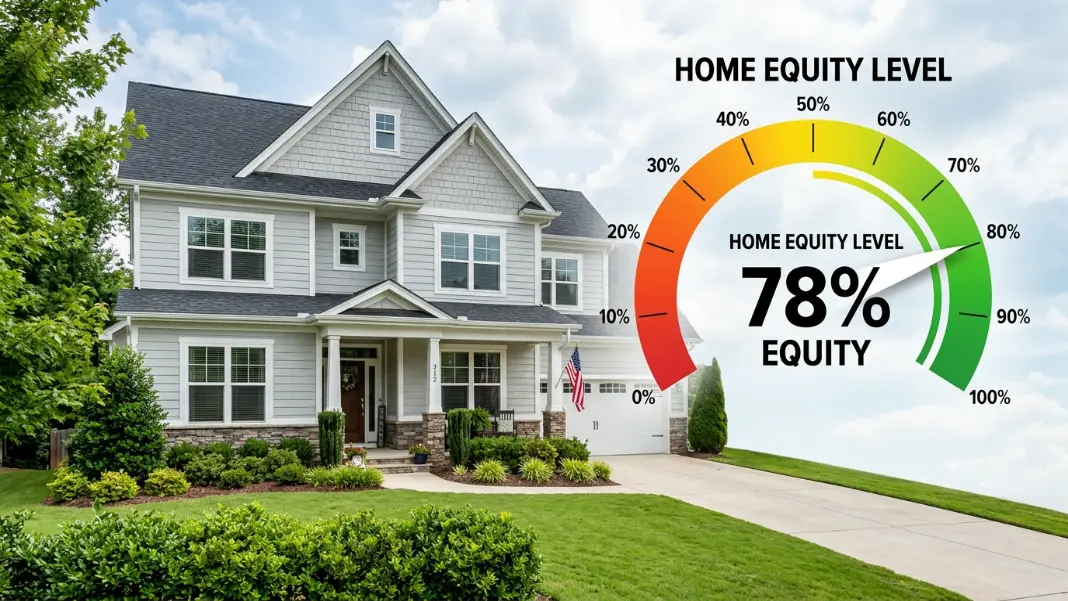
Most people searching this question expect a specific percentage. The real answer is more interesting: there is no minimum equity percentage written into HUD rules. The requirement that exists in practice comes entirely from the math. Understanding that math tells you exactly where you stand before you ever call a lender.
Why There Is No Official Equity Minimum#
HUD does not specify that you need 50% equity or 60% equity. The only hard rule is that any existing mortgage, HELOC, or lien against the property must be paid off at closing using your reverse mortgage proceeds. If your principal limit (the maximum loan amount based on your age and home value) is not large enough to cover the existing debt plus closing costs, the loan is not viable.
That single rule creates the practical equity floor. And because the principal limit depends heavily on your age, the floor is different for a 62-year-old than it is for an 80-year-old.
The Math That Creates the Floor#
The formula to find your minimum required equity:
Minimum equity % = 1 - PLF + closing cost % of home value
Where PLF is the principal limit factor for your age and rate, and closing costs run approximately 3.5% to 5% of home value for most HECM borrowers.
At a 6.5% expected interest rate with 4% estimated closing costs:
| Age | PLF | Min Equity Just to Qualify | Min Equity for Meaningful Proceeds |
|---|---|---|---|
| 62 | 0.470 | 57% | 67% |
| 65 | 0.495 | 55% | 64% |
| 68 | 0.520 | 52% | 62% |
| 70 | 0.535 | 51% | 60% |
| 75 | 0.575 | 47% | 56% |
| 80 | 0.615 | 43% | 52% |
| 85 | 0.660 | 38% | 48% |
"Meaningful proceeds" here means at least 10% of the home's value available as cash after paying off the existing mortgage and costs. The "just to qualify" column is the absolute floor where you break even at zero net cash.
Lower expected interest rates shift every row favorably. At 5.5% rates, a 70-year-old's floor drops to roughly 47%. At 7.5% rates, it rises to about 55%.
How an Existing Mortgage Changes the Numbers#
Every dollar you owe reduces your net proceeds by exactly one dollar. The lender does not consider whether your mortgage rate is favorable or whether you recently refinanced. The outstanding balance gets retired at closing no matter what.
Here is the same $350,000 home at age 70 (PLF 0.535) with different mortgage balances:
Gross principal limit: $350,000 × 0.535 = $187,250 Estimated closing costs: $14,000 Available to pay off mortgage and deliver cash: $173,250
| Existing Mortgage | Your Equity % | Net Cash Available |
|---|---|---|
| $0 | 100% | $173,250 |
| $60,000 | 83% | $113,250 |
| $100,000 | 71% | $73,250 |
| $140,000 | 60% | $33,250 |
| $175,000 | 50% | ($1,750) - does not qualify |
At 50% equity with this age and rate, the loan fails by about $1,750. At 51% equity (roughly $178,500 in equity), the loan barely qualifies with almost nothing left over. Useful proceeds start appearing around 55% to 60% equity.
The Reverse Mortgage Calculator runs these numbers instantly so you can test different balances without doing the arithmetic manually.
What You Can Actually Get at Different Equity Levels#
Knowing the floor is useful, but what borrowers really want to know is: if I have X% equity, how much money can I access? Here are real figures on a $400,000 home at age 70 (PLF 0.535, $16,000 estimated costs):
| Equity % | Existing Mortgage | Gross Limit | After Costs | Net Cash |
|---|---|---|---|---|
| 90% | $40,000 | $214,000 | $198,000 | $158,000 |
| 80% | $80,000 | $214,000 | $198,000 | $118,000 |
| 70% | $120,000 | $214,000 | $198,000 | $78,000 |
| 60% | $160,000 | $214,000 | $198,000 | $38,000 |
| 52% | $192,000 | $214,000 | $198,000 | $6,000 |
| 49% | $204,000 | $214,000 | $198,000 | Does not qualify |
There is a hard cliff. At 49% equity the loan stops working entirely. Above that threshold, every additional point of equity translates to approximately $4,000 in additional available cash on a $400,000 home.
For a deeper look at exactly how the principal limit formula works and where each number comes from, see How to Calculate a Reverse Mortgage.
How Age Dramatically Shifts What You Can Access#
The tables above use age 70 as the baseline. The difference across ages on the same home is significant.
On a $400,000 home with no existing mortgage and 6.5% expected rate:
| Age | PLF | Gross Limit | After 4% Costs | Net Available |
|---|---|---|---|---|
| 62 | 0.470 | $188,000 | $172,000 | $172,000 |
| 65 | 0.495 | $198,000 | $182,000 | $182,000 |
| 70 | 0.535 | $214,000 | $198,000 | $198,000 |
| 75 | 0.575 | $230,000 | $214,000 | $214,000 |
| 80 | 0.615 | $246,000 | $230,000 | $230,000 |
| 85 | 0.660 | $264,000 | $248,000 | $248,000 |
A 62-year-old and an 85-year-old on the same $400,000 home access $172,000 versus $248,000, a $76,000 difference, without any change in equity percentage. Age is the most powerful variable for borrowers who have time to wait.
High Home Values and the FHA Lending Limit#
The FHA lending limit ($1,149,825 in 2025) creates a ceiling that affects high-value homeowners significantly.
On a $1.5 million home at age 75 (PLF 0.575):
- Without the lending limit: $1,500,000 × 0.575 = $862,500
- With the lending limit applied: $1,149,825 × 0.575 = $661,149
The $201,351 difference represents home value above the limit that generates zero additional loan capacity. The effective equity percentage for high-value homeowners is worse than the raw number suggests.
For homes above the lending limit, proprietary jumbo reverse mortgages from private lenders use different underwriting and can lend against values up to $4 million in some cases. Products like Finance of America's HomeSafe or Longbridge's Platinum product are worth comparing if your home value significantly exceeds the FHA cap.
The Line of Credit Growth Strategy for Borderline Cases#
If your equity is borderline right now and you do not have an urgent cash need, the HECM line of credit has a feature worth understanding before you dismiss the product.
The unused portion of a HECM line of credit grows at the current interest rate plus 0.5% annually. This growth is guaranteed by the program itself and does not depend on home value.
A 65-year-old who qualifies for only $40,000 in net proceeds today might set that up as a line of credit and leave it untouched for 10 years. At a 7% effective rate, that $40,000 grows to approximately $78,700. At 20 years, it reaches $154,800.
This growth works best as a hedge: open the line of credit while you qualify and rates are favorable, then leave it growing as an emergency reserve. By the time you actually need the funds, the available amount could be substantially larger than what you qualified for at opening.
Ways to Improve Your Position Before Applying#
Pay down the existing mortgage first. Every extra payment you make before applying directly increases your net proceeds by the same amount at closing. If you have $20,000 sitting in a low-yield savings account, applying it to the mortgage before your reverse mortgage application adds $20,000 to your available cash.
Wait until a later age. Each year increases your PLF by roughly 0.01 to 0.02. On a $400,000 home, waiting three years from 68 to 71 adds approximately $12,000 to $16,000 in gross proceeds. For borrowers in good health without an immediate need, the compounding effect of waiting is material.
Targeted home improvements before the appraisal. The reverse mortgage is based on the appraised value, not the tax assessment or Zillow estimate. A $10,000 kitchen or bathroom update that lifts the appraised value by $20,000 adds approximately $10,700 to the gross principal limit for a 70-year-old (0.535 × $20,000). Return on investment matters here: focus on improvements appraisers weight heavily in your market.
Watch for rate movements. A 0.5% decrease in expected interest rate increases PLFs by roughly 0.03 across all ages. On a $400,000 home that is $12,000 in additional gross proceeds. If rates are currently high, modeling what a rate drop would mean for your calculation is worth doing before you decide whether to apply now or wait.
What to Do If You Are Just Under the Threshold#
If your numbers are close but not there yet, a few paths exist:
Get a formal loan estimate anyway. Manual calculations use estimated PLF tables and rough cost figures. An actual lender estimate uses the precise current expected rate and a real appraisal. Your official number may be different, sometimes favorably.
Make a targeted extra mortgage payment. If you are $15,000 short of qualifying, paying $15,000 extra on your existing mortgage before applying moves the number. The math is direct.
Look at the HECM for Purchase program. If you are planning to downsize or relocate, this program lets you buy a smaller home using a reverse mortgage as partial funding. Starting with a less expensive home may give you better equity ratios immediately without spending years waiting.
Consider your timeline honestly. If you are 68 now and would qualify at 72 with the same equity, the four-year wait produces both a higher PLF and potentially more home appreciation. Running that scenario is worth the time.
Use the Reverse Mortgage Calculator to model these different scenarios and see exactly where your threshold falls based on your age, home value, and existing mortgage balance.
Frequently Asked Questions#
At age 80 or above at current rate levels, it starts becoming possible. At 80 with a PLF of 0.615, after 4% closing costs you can cover up to about 57.5% of home value as an existing mortgage. That means 42.5% equity is the rough floor to break even, so 40% equity does not quite work at 80. At 85 (PLF 0.660), after costs the floor drops to about 38%, making 40% equity viable. For borrowers between 62 and 78, 40% equity is generally not enough at today's rate levels.
No. The reverse mortgage is secured by the home as a whole, not individual ownership percentages. Combined equity is what the lender looks at. Both spouses should be listed as co-borrowers if both are 62 or older, since HUD's non-borrowing spouse protections were updated but co-borrower status still offers the strongest protection.
Home appreciation after closing does not change your available proceeds. If you took a line of credit, the line grows at the interest rate regardless of what your home is worth. If you want to access appreciation that occurs after closing, you would need to refinance into a new HECM, which restarts the cost structure.
Both must be paid off at closing from your reverse mortgage proceeds. Add the balances together to get your total existing debt figure, then subtract that from your available principal limit after costs. If the combined debt exceeds your principal limit, the loan is not viable unless you pay down some of the balance beforehand.
A reverse mortgage is one piece of a retirement income picture. Borrowers who also receive Social Security, pension income, or income from investments need to model how all of these fit together. Federal employees can estimate their FERS pension alongside home equity using the FERS Retirement Calculator to see the full picture.
Written by
Hassaan Rasheed
Web Developer & Content Researcher
Hassaan builds calculators and writes source-linked guides across the site's subject areas. Calculator methods and reference data are documented in each guide so readers can verify the underlying sources.
About the author and methods